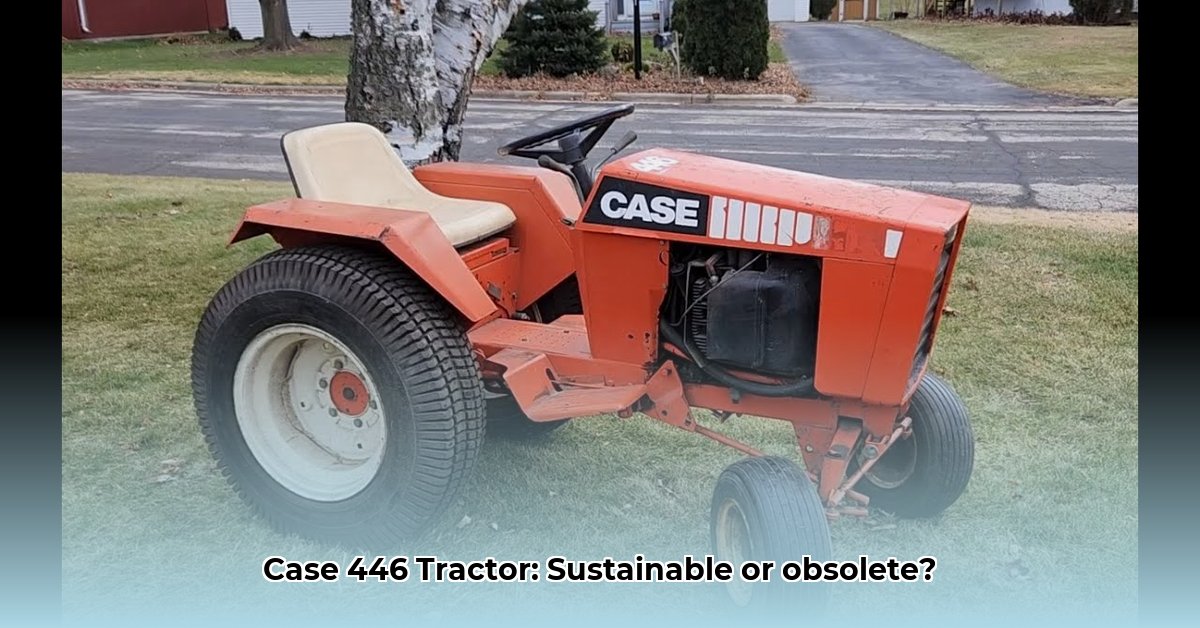
The J.I. Case 446 garden tractor, produced from 1972 to 1988, represents more than just a piece of vintage machinery; it embodies a philosophy of durability and adaptability rarely seen in today's disposable consumer landscape. This review assesses its capabilities, historical context, and enduring relevance in the pursuit of sustainable agricultural practices. But can a 1970s tractor truly claim a sustainable legacy? For more information on Case 446 value, check out this resource.
More Than Just a Mower: Versatility and Resource Efficiency
The Case 446's strength lies not solely in its robust build but its impressive versatility. A wide array of attachments – snow blowers, tillers, and various implements – transformed this machine into a year-round workhorse. This adaptability significantly reduced the need for multiple specialized pieces of equipment. Imagine the resources saved: less manufacturing, less transportation fuel, and less storage space needed. This inherent multi-functionality represents a quietly powerful form of sustainability, minimizing environmental impact through reduced resource consumption. Does this versatility justify its place in a modern, eco-conscious approach to gardening and small-scale agriculture?
Power and Efficiency: A Historical Perspective
The 446's 16-horsepower Onan engine, while not a paragon of fuel efficiency by today's standards, deserves a nuanced evaluation. Compared to the alternatives available during its time, the 446 likely offered a superior fuel-consumption-to-work ratio. Smaller, less durable machines, or manual labor, would have presented a higher overall environmental cost. This, however, requires further investigation into specific fuel consumption rates per unit of work, comparing the 446 to its contemporaries. Did its lower power output, coupled with its longevity, actually lead to less fuel consumed per overall task compared to its smaller, shorter-lived counterparts? The answer lies in a more detailed historical analysis.
Longevity and the Unknown Factors: Materials and Disposal
The Case 446's exceptional longevity is a major point in its favor – fewer replacements mean less waste, a cornerstone of sustainable practices. However, a critical knowledge gap exists: we lack comprehensive information on the composition and recyclability of its materials. What specific materials were used in its construction? How easily can those materials be recycled today? And what are the environmentally sound disposal methods for a machine of this age and build? Addressing these crucial unknowns is essential for a complete sustainability assessment.
A Legacy of Durability and Adaptability: Lessons Learned
Despite the scarcity of data on its materials, the Case 446 delivers valuable lessons for modern sustainability efforts. Its robust design underscores the importance of building equipment for longevity. A focus on durable, repairable products dramatically reduces long-term environmental impact compared to their short-lived counterparts. This durability, paired with its versatility, is a compelling argument for a shift towards designing machines for long-term use and adaptability, rather than short-term cycles of consumption and disposal. Is this not a powerful statement about sustainable manufacturing practices?
The Case 446 and Fuel Efficiency: A Practical Guide
Calculating the fuel efficiency of a vintage machine like the Case 446 requires a practical, hands-on approach. Accurately measuring fuel usage during a specific task (mowing, tilling, etc.), while considering variables like terrain and operator skill, provides a reasonable estimate. This can be done by meticulously tracking fuel consumption over a set period of operation and relating this to the area or volume of work completed. Consistent measurements under varying conditions are necessary for a comprehensive understanding. Such data will allow for a more informed comparison with modern alternatives.
Key Takeaways:
- The Case 446's extraordinary lifespan minimizes waste and environmental impact.
- Its versatile design significantly reduces the need for multiple specialized machines.
- Further research on material composition and appropriate disposal methods is needed for thorough assessment.
- An approach of accurate and consistent measurement can be used to estimate fuel efficiency.
The J.I. Case 446's legacy is a complex narrative of durability, adaptability, and lingering questions about its complete environmental footprint. While its longevity and versatility undeniably contribute to sustainable practices, a comprehensive analysis requires filling the gaps in our knowledge regarding materials science, disposal practices, and a more detailed comparison to contemporary alternatives. Further research will paint a more complete and nuanced picture of this intriguing machine's impact on sustainability.